

The Grand Essentials to Happiness in One Simple Framework
/When I was in high school, a friend gave me a framed quote that I’ve treasured for decades:
“The grand essentials to happiness in this life are something to do, something to love, and something to hope for.”
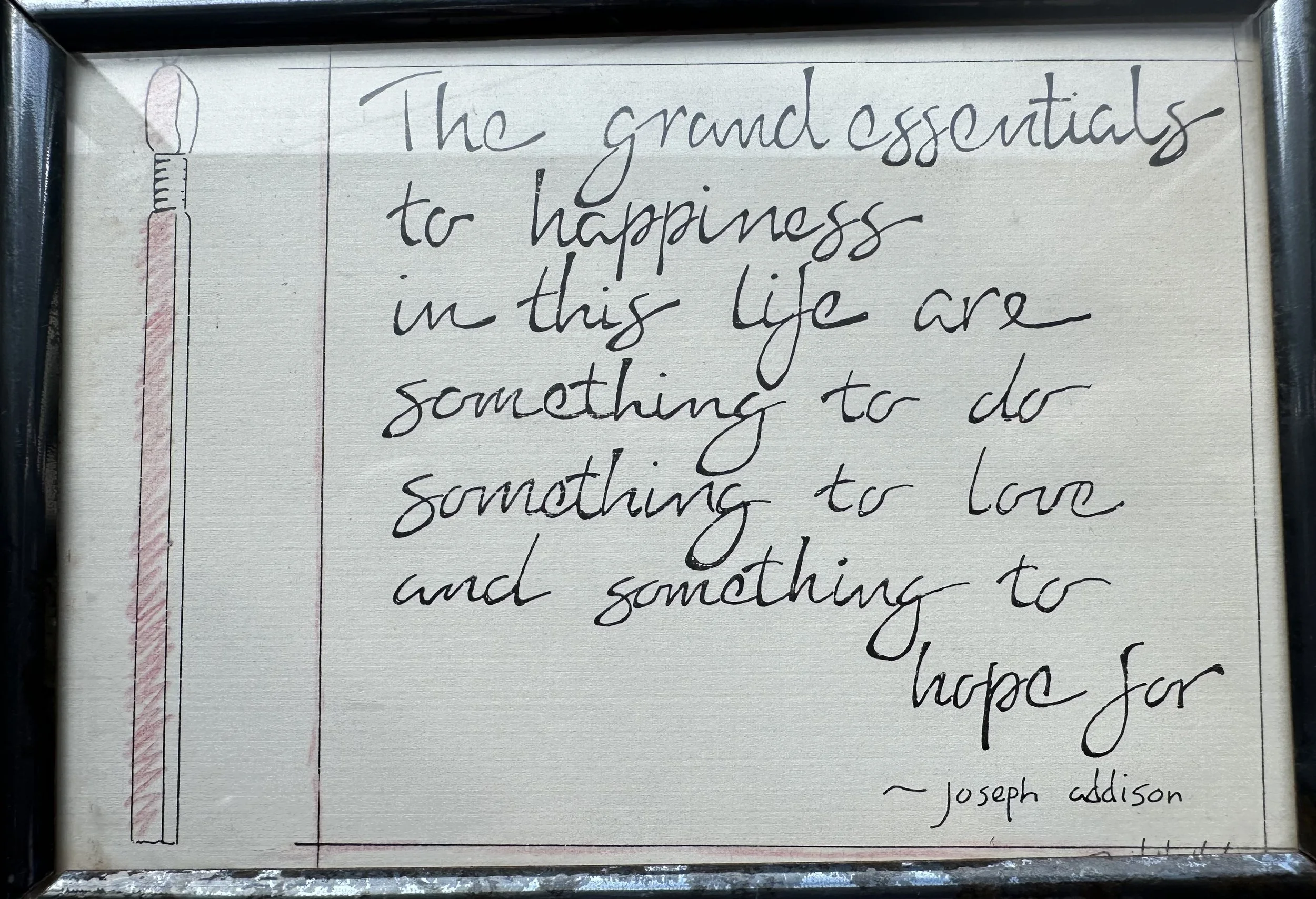
Written in the early 1800s by George Washington Burnap, a Unitarian clergyman and Harvard graduate, this simple sentence has followed me through every season of life. After losing his mother when he was just seven years old, Burnap devoted his life to serving others, a life guided by purpose, compassion, and hope.
At the time of this framed gift, I had no idea how deeply those words would influence me. But as life unfolded through education, career, family, and all the unpredictable twists in between, I’ve come to appreciate the timeless wisdom in their simplicity.
What I love most about Burnap’s framework is how it distills the vast and complicated concept of happiness into just three essentials: meaning, love, and hope. And while entire libraries are filled with books about happiness, it’s these few words that capture the essence of what it truly means.
Over the years when life has felt off or less fulfilling, I can often trace it back to one of these three areas being out of balance. Maybe I’ve been so busy “doing” that I forget to make time for those I love. Or perhaps I’ve been chasing goals but have lost sight of what I’m truly hopeful about. This quote has become a quiet compass, reminding me to pause, take stock, and gently recalibrate.
One of the clearest examples of this came during my first few years of parenthood. They were a whirlwind of diaper changes, meal prep, and corporate meetings that stretched late into the night. With two kids born just 16 months apart, I was sprinting toward burnout. That period forced me to take a hard look at the life I was building and ask whether it matched the one I actually wanted.
It took a year of nighttime classes, hours of test prep, unwavering support from my spouse, and a carefully built three-year emergency fund to pivot into a career that offered both meaning and balance. Today, in my work as a financial planner, I find joy in helping others create lives aligned with their values - lives where they can pursue purpose, nurture relationships, and plan for the future with hope.
Take, for instance, a recent client who came to us after being laid off from her school district job. Navigating a traumatic career shift, she felt unsure of her next steps. After we built a financial plan and explored how she could find meaningful work while still having time for her family and travel dreams, she left with renewed enthusiasm for her future. Later, she emailed to say, “I’m not sure you realize how positive it was to receive your thoughtful and wise encouragement — it truly shifted things for me.”
While finding fulfillment through work, I’m also able to show up for my family in all the ways that matter most.
Lately, Burnap’s words feel especially relevant as I navigate raising teenagers. I often ask myself: How can I help my kids maintain a healthy sense of well-being by weaving love, meaning, and hope into their daily lives?
Showing love to teens requires a delicate touch. They can see right through forced gestures. Still, affection finds its way through small things: filling up their gas tank, saying goodnight through a closed door, or making chocolate chip pancakes on a Sunday morning.
When my kids face a rough patch with friends or receive a disappointing grade, I look for ways to help them rediscover hope. That might mean exploring a new city, setting a new goal, or simply reminding them there’s always another chapter ahead. And as they push through abstract classwork, I try to help them find meaning by connecting what they’re learning to the world they’ll one day help shape.
It’s worth noting what Burnap’s list leaves out. Nowhere does it mention making money, achieving fame, or collecting likes on social media. Those things might spark fleeting joy, but they rarely sustain a deeper sense of purpose or contentment.
Research supports this idea. A well-known Princeton study led by Nobel Prize-winning psychologist Daniel Kahneman found that emotional well-being plateaus at a certain annual income level (about $100,000–$120,000 today). Life satisfaction can continue to rise with income, but only modestly. In other words, money can buy comfort and security, but meaning, connection, and hope matter far more when it comes to genuine happiness.
As the year winds down and a new one approaches, Burnap’s framework offers an invitation to reflect. If you’re looking to reset, refocus, or simply feel more grounded, consider asking yourself:
Do I have something meaningful to do?
Am I nurturing the relationships that matter most?
What am I looking forward to with hope?
Perhaps happiness isn’t all that complicated after all. Maybe it’s simply about tending to these three essentials with intention, gratitude, and presence.
Wishing you and your loved ones a peaceful and joyful holiday season!
